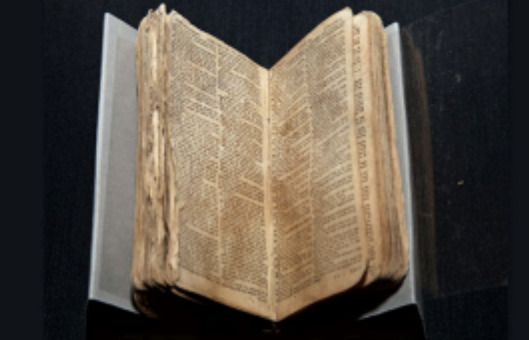
This advertisement published in the Philadelphia Gazette is for the return of George Washington's former slave, Ona Judge, after she self-emancipated in 1796.
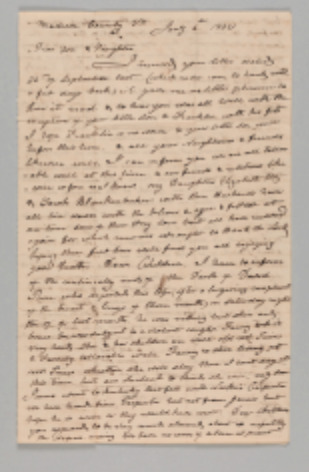
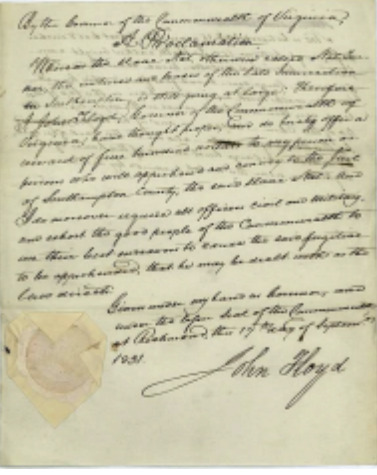
A letter from Eleanor Weaver in Madison County, Virginia, to her daughter, Theodosia, and son-in-law, Jacob, discussing details regarding the 1831 Southampton Rebellion led by Nat Turner
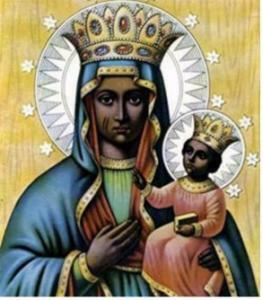
While there is speculation on whether or not this item really existed, it is assumed that there was a small icon statue of the Virgin Mary that Rivière and his followers would convene with directly, referred to as “the little Virgin”11.
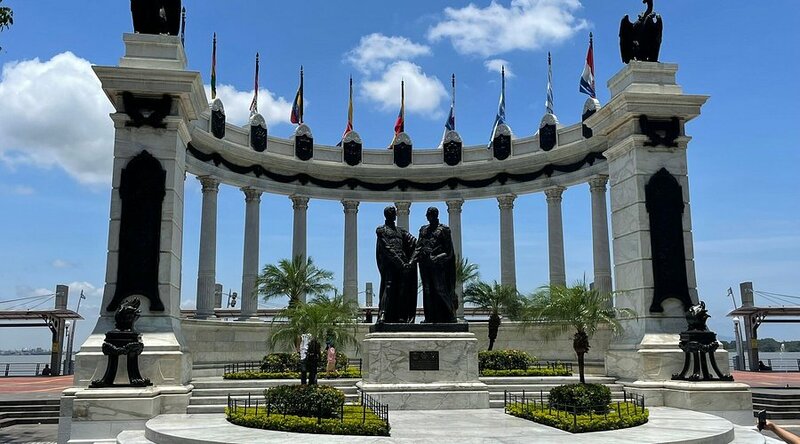
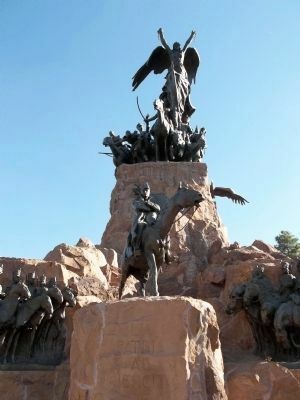
Surrounded by flags and pillars, this monument centers around the two statues of Jose de San Martín and Simón Bolívar shaking hands, representing their meeting in 1822.
Inside the Buenos Aires Metropolitan Cathedral is the Mausoleum of Jose de San Martín. His black coffin is surrounded by three female statues, representing the countries he liberated: Argentina, Peru, and Chile.
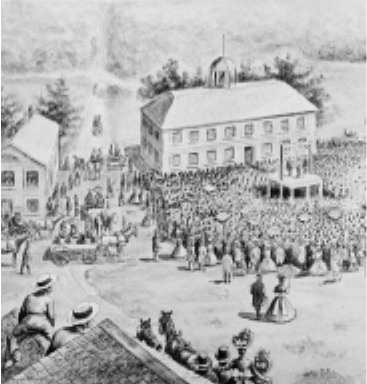
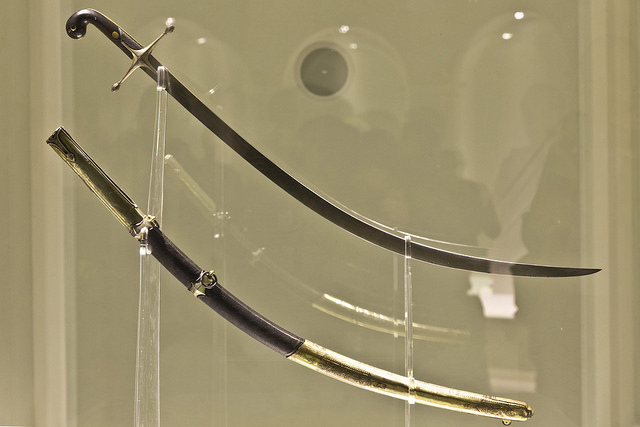
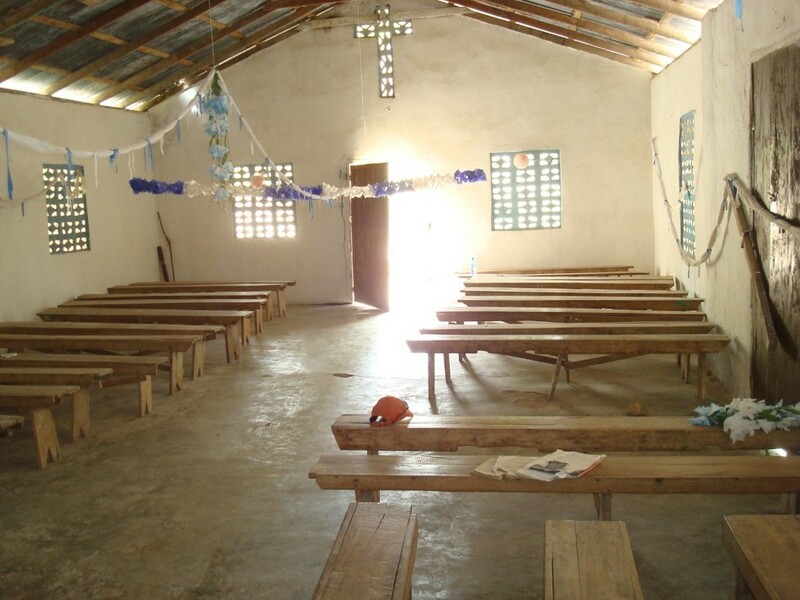
This was a chapel that Romaine-la-Prophétesse had constructed on his Trou-Coffy plantation, where he would pray to the Virgin Mary and preach with a sword in hand1
This episode explores the historical inception, adjustment, and attempted overturning of the 14th Amendment. Seeking to inform our listener on the constitution they own, “We the People”, this podcast takes a chronological and educational approach to history. The podcast is broken into three major themes. The first is the events leading up to the drafting, finalization, and passing of the amendment. The second section explores the early social, legislative, and judicial challenges to the amendment as society adjusted to and fought back against its protections. The third segment takes the reader into a time much more familiar, the present. Here, we explore President Trump's Executive Order 14160, Protecting the Value and Meaning of American Citizenship, his rhetoric, and question the ability to make this unilateral action at all in the courts. The Executive order represents executive overreach of Article V of the constitution, which lays out a multi-branch amendment process. Come along as we follow the historical roots that are vital to interpreting the present’s foundation. Without educating ourselves, we risk being bystanders to major foundational change. The 14th amendment is ours, and we must protect it.
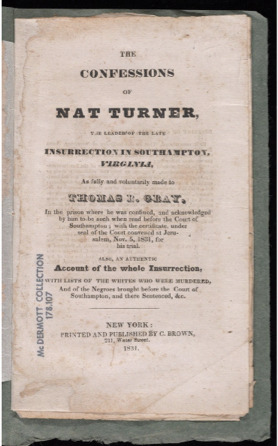
Nat Turner was born enslaved in Southampton County, Virginia, on October 2, 1800. From a young age, Turner was a very religious person and greatly influenced by his religious practices and beliefs. Turner was a preacher on his plantation, and his occupation allowed him to travel to various surrounding plantations. His mobility allowed him to be in contact with other enslaved men and women and create connections along the way. From the beginning of his life, Turner was seen as a prodigy, as he learned to read and write on his own, causing him and his family to believe that he was destined for greatness and more than what the enslaved life offered. Turner’s religious beliefs led him to believe that God had spoken to him, telling him to lead his 1831 slave rebellion in Virginia. Turner’s rebellion was a continuation of the values and successes of the Haitian Revolution.
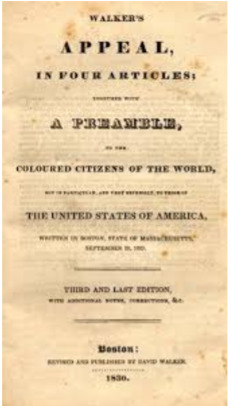
David Walker was born in Wilmington, North Carolina, on September 28, 1796, to a free mother and an enslaved father, thus making him free. After witnessing slavery firsthand, he would go on to do his part in the abolitionist movement by becoming a member of the Massachusetts General Colored Association and writing one of the most radical literary pieces in American History. This piece is famously known as David Walker’s Appeal to Colored Citizens of the World. In this appeal, Walker criticizes the Founding Fathers for their hypocrisies that the United States claims to be founded upon. Specifically pertaining to the Declaration of Independence’s infamous line that “all men are created equal”. While David Walker may not have lived to see the fruits of his labor, his same sentiments would be seen in other movements for black liberation.
José Francisco de San Martín was born in Yapeyú, Río de la Plata, Argentina, on February 25, 1778. Born to Spanish parents, his father was a general stationed in Argentina. The family moved back to Spain in 1783, settling in Málaga. San Martín attended school until 1789, when he joined the regiment of Murcía. He served in the Spanish army and had a whole military career before returning to Argentina in 1812. That same year, he was married to María de los Remedios de Escalada. In Buenos Aires, he began his military career, his regiment was the Regiment of Mounted Grenadiers. He led the Revolution of October 8, resulting in the Second Triumvirate. In 1814 he moved to Mendoza, accepting the governorship of Cuyo. There he began mobilizing the Army of the Andes, in 1817 crossing the mountain range into Chile. This culminated in the Battle of Chacabuco. General Bernardo O’Higgins remained in Chile while San Martín continued on to Peru, where Lima was the center of royalist power. He and his men arrived south of Lima by ships, and after six weeks took the city. Independence was declared in Peru in July 1821.
Ona Judge was born to an enslaved woman owned by the Washington-Custis family and a travelling tailor named Andrew Judge in 1773. When her master George Washington was elected as the first president of the United States in 1789, he brought her along with six other enslaved people to wait on his family at the then-capital in Philadelphia. She would live and work for them for seven years, going back to Virginia twice a year so that her masters could avoid the Gradual Emancipation Act of 1780. Upon realizing that Martha Washington planned on gifting her to her granddaughter, Eliza Custis, as a wedding present, Judge decided to use her contacts in Philadelphia to escape to Portsmouth, New Hampshire. The Washingtons made several attempts to bring her back but to no avail, ultimately stopping only to avoid a public scandal. Ona Judge would live out her life in Portsmouth with her husband and three children, eventually passing away in 1848 at the age of seventy five.
Vicente Guerrero was born on August 10, 1782, in Tixtla (the present-day state of Guerrero), Mexico. He was of Afro-Indigenous descent. Guerrero joined the Mexican War of Independence in 1810 and rose through the ranks as a skilled and determined military leader. His experience of being a mule driver allowed him to gain extensive knowledge on the geography of Mexico and impressive communication skills that would set him up to be extremely successful in the military and political environment of Mexico’s revolution. After Mexico gained independence, Guerrero became a powerful actor for liberal reforms and the abolition of slavery. In 1829, he became president and the first Afro-indigenous man to hold the office. His presidency was cut short by a conservative and elite-led coup, eventually leading to his exclusion on the grounds of treason on February 14, 1831. He is remembered as a national hero with a strong legacy from fighting for independence and social justice.
Ashley’s household about the new Massachusetts Constitution stating, “all men are born free and equal,” Freeman decided to fight for her freedom. She sought help from the attorney and abolitionist Theodore Sedgwick. Freeman and another enslaved man, Brom, became plaintiffs in the Brom & Bett v. Ashley case, arguing that slavery violated the state constitution. The court ruled in their favor, granting them freedom. Freeman then worked for Sedgwick’s family as a paid employee for over 20 years. Her case not only secured her own freedom but also set a powerful legal precedent for future freedom in Massachusetts.
Simón Bolivar was born into an aristocratic family in Caracas, Venezuela, on July 24, 1783. He was then sent to Spain to complete his education, where he was exposed to Enlightenment thinkers like Rousseau and Montesquieu; shaping his belief in liberty, constitutionalism, and the moral duty of revolution. After completing his education, Bolívar took a wife with whom he returned to Venezuela in 1803. Tragically, she fell ill and died within the year. Following the loss of his wife, Bolívar decided to travel in Europe for some time, particularly spending time in France and Italy. He was inspired by Enlightenment ideals and dreamed of a free and unified Latin America. Following his return to Venezuela in 1807, he eventually became directly involved with Latin America's struggle for independence when he joined the movement for Venezuelan independence in 1810. He went on to play a pivotal role in the Latin American independence movements via his military genius and leadership. With the liberation of New Granada in 1819, Bolívar seized the opportunity to realize his broader political vision: the creation of a large, unified republic that could withstand foreign intervention and internal decay. This vision took institutional form at the Congress of Angostura in 1819, where Bolívar proposed a centralized republic rooted in republican ideals but tempered by strong executive power. Gran Colombia was intended to be a symbol of postcolonial unity, a bastion against both Spanish reconquest and the fragmentation that had plagued earlier revolutionary republics. Bolivar became the first and only president of known as Gran-Columbia. Following the successful liberation of Latin America, Bolivar became the first president of the newly unified ex-Spanish territories. Although Gran Colombia represented the triumph of independence, its internal cohesion was shaky from its establishment. The republic encompassed vast and diverse territories with deep-rooted regional identities, weak infrastructure, and little shared political culture beyond resistance to Spain. Bolívar’s leadership grew increasingly autocratic in response to the political and military chaos that surrounded him. Bolívar resigned in 1830, his departure symbolized the unraveling of the union he had fought to create. Venezuela, Ecuador, and New Granada (modern-day Colombia) chose to pursue their own paths, abandoning the unified vision that Bolívar had worked so hard to achieve. Bolívar died later that year in exile, in a state of disillusionment, having seen his dream of a united Latin America collapse in on itself.